
year
2024
year
2024
timeframe
8 weeks
timeframe
8 weeks
industry
Food & Beverage
industry
Food & Beverage
category
UI/UX
category
UI/UX
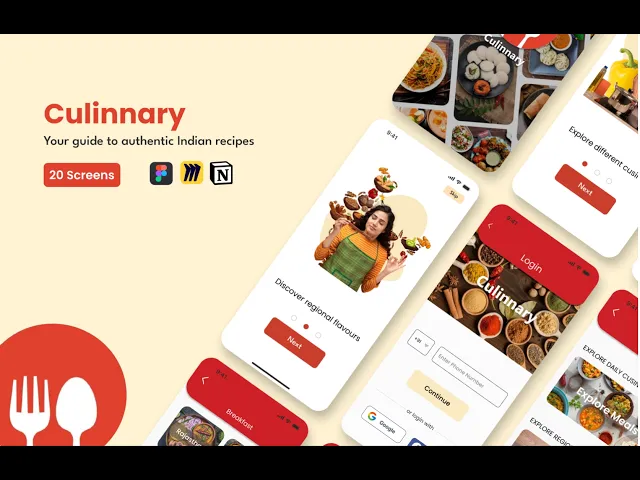
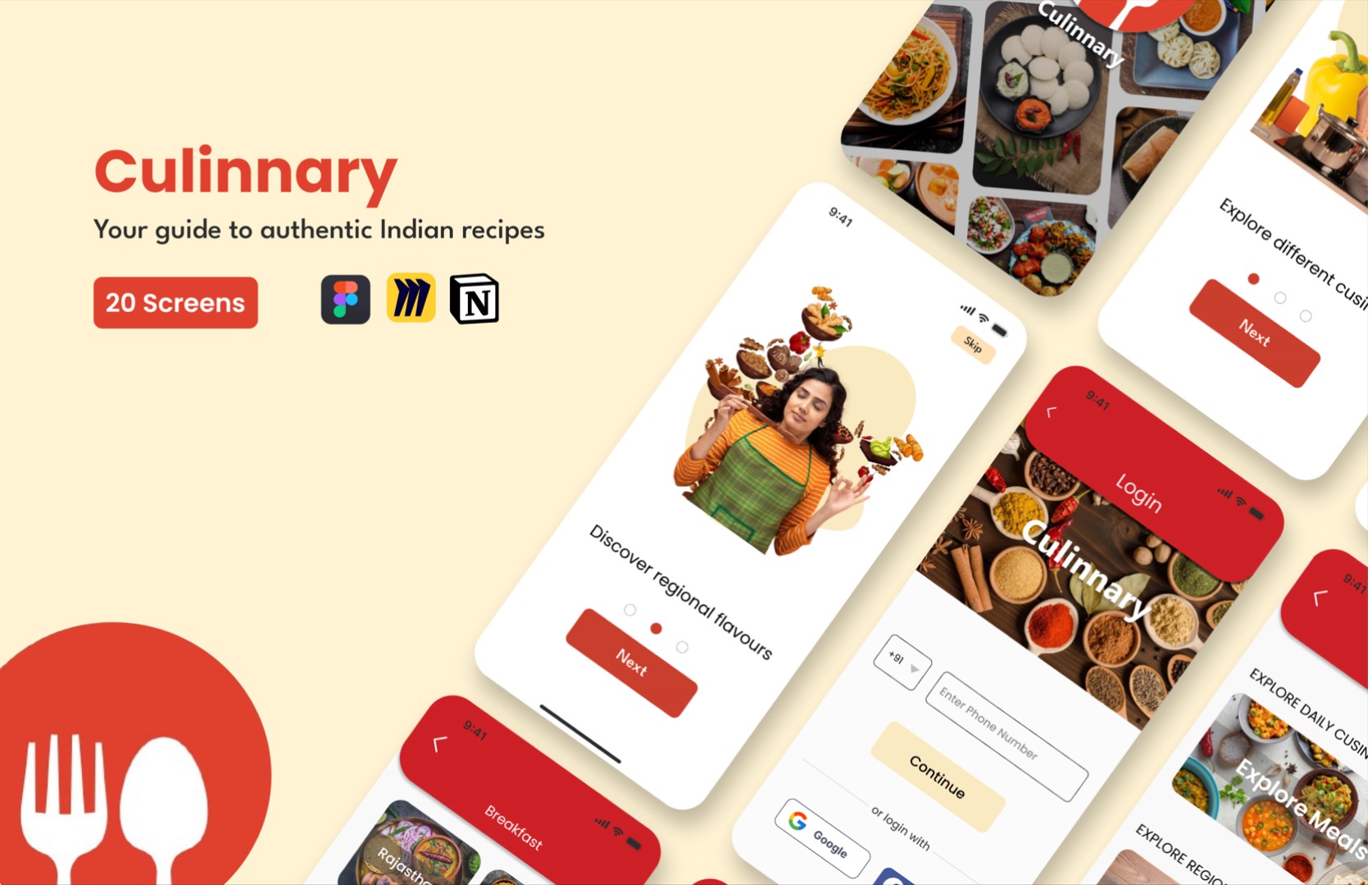
Culinary is a mobile-first food discovery and cooking support app that enables equal access to regional and local food knowledge through guided discovery and trusted video-based instruction.
CULINARY APP
Project headline
Improving meal discovery through guided cooking
Context
Lifestyle · B2C · Mobile
Role
UX/UI Designer · Interaction → Visual
The Project Overview
Food is deeply cultural, yet access to food knowledge is not equal. While recipes exist online, discovering authentic regional dishes and learning how to cook them often requires prior exposure, social networks, or trial-and-error.
This project began with the broader idea of equality, which gradually narrowed down to food information accessibility - questioning why culinary knowledge should be limited by geography, language, or background.
The goal was to design a system that makes discovering and preparing regional food as easy as possible for everyone.
The Problem Definition
Most people want to cook something new but fall back on familiar dishes. Existing recipe platforms are text-heavy, intimidating, and fragmented across blogs and videos. Authenticity is hard to judge, instructions feel overwhelming, and confidence drops quickly.
The core problem became clear: how do we reduce friction and anxiety when users try to discover and cook unfamiliar regional food?
The Research Process
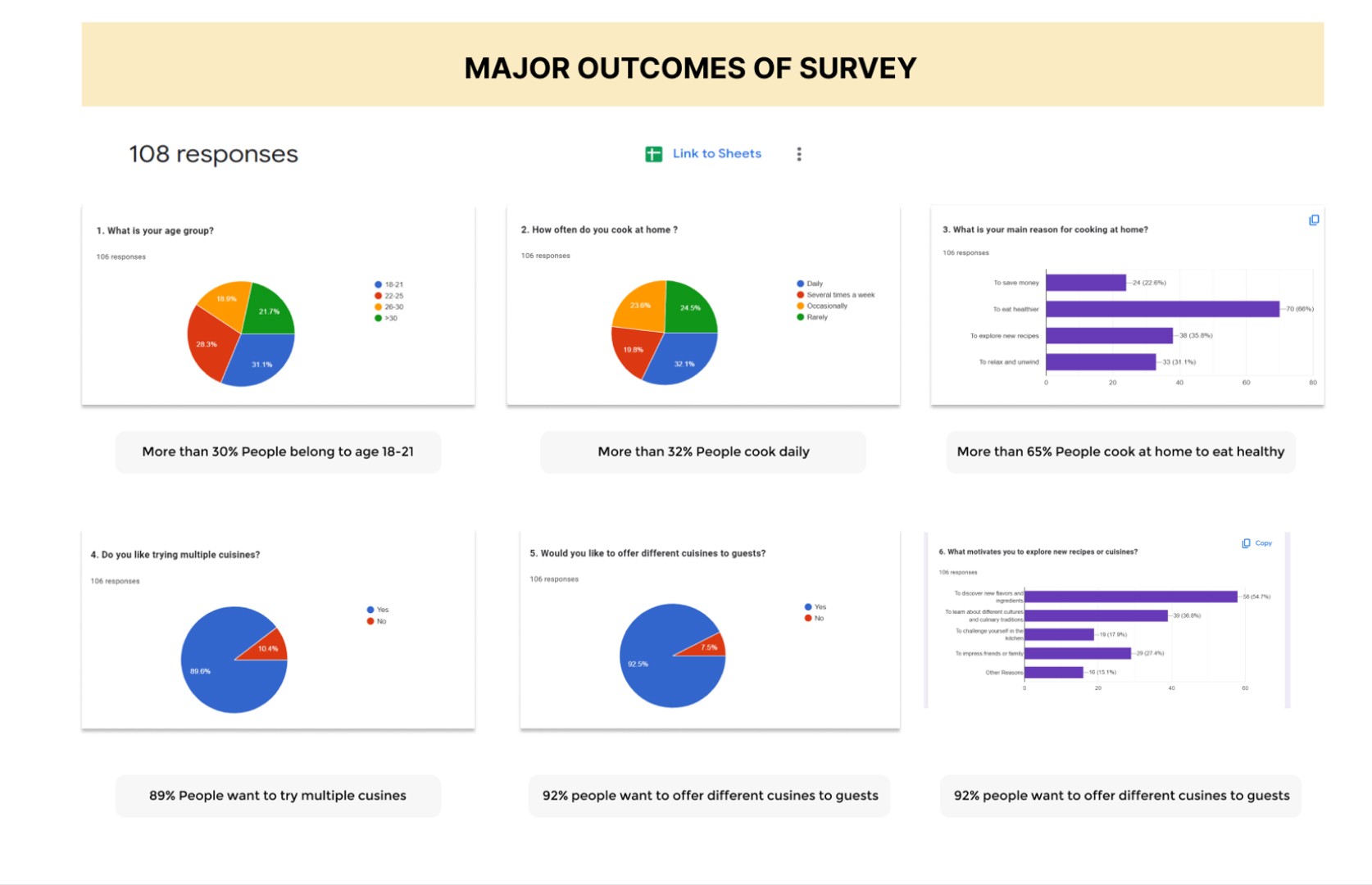
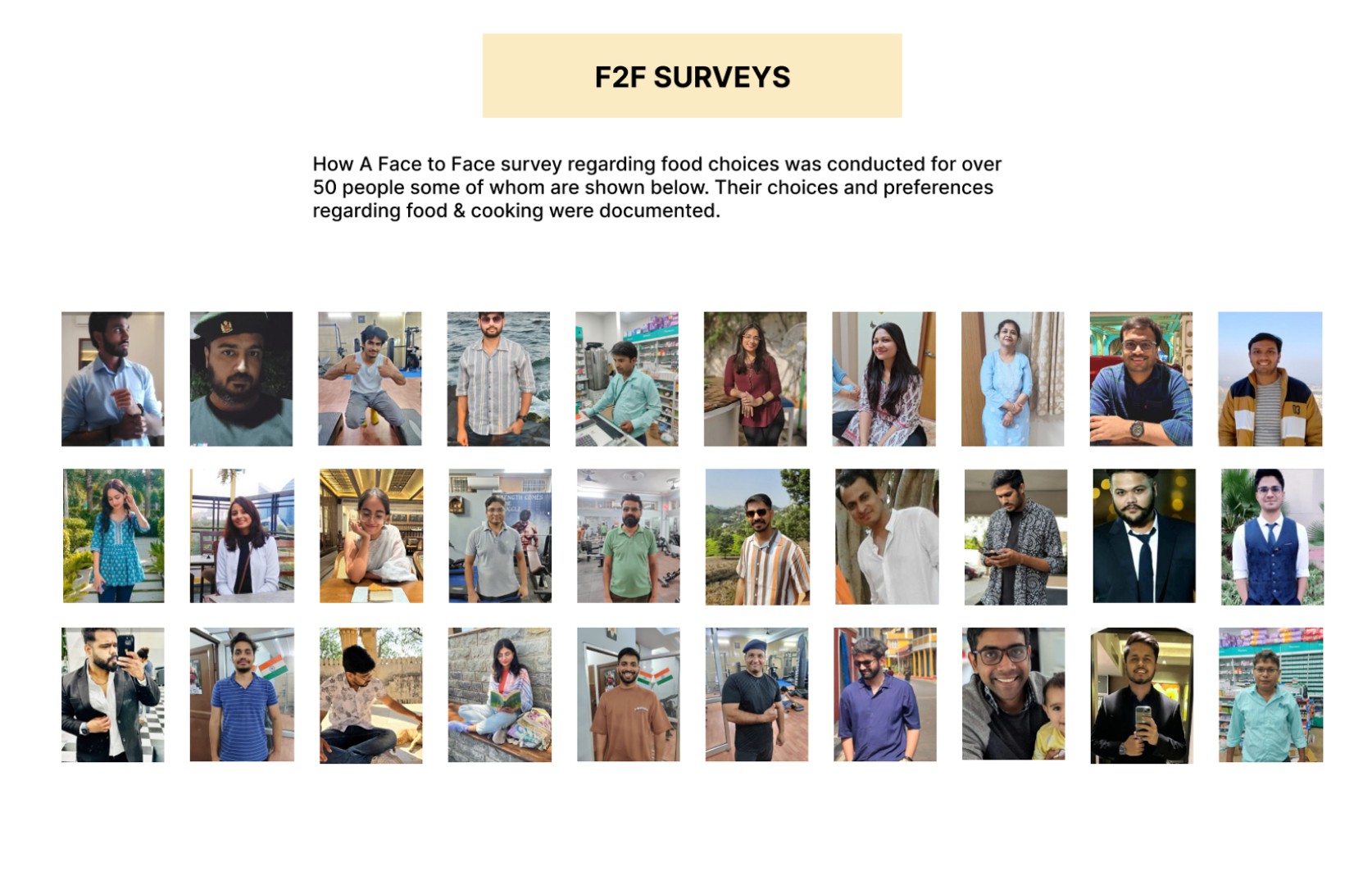
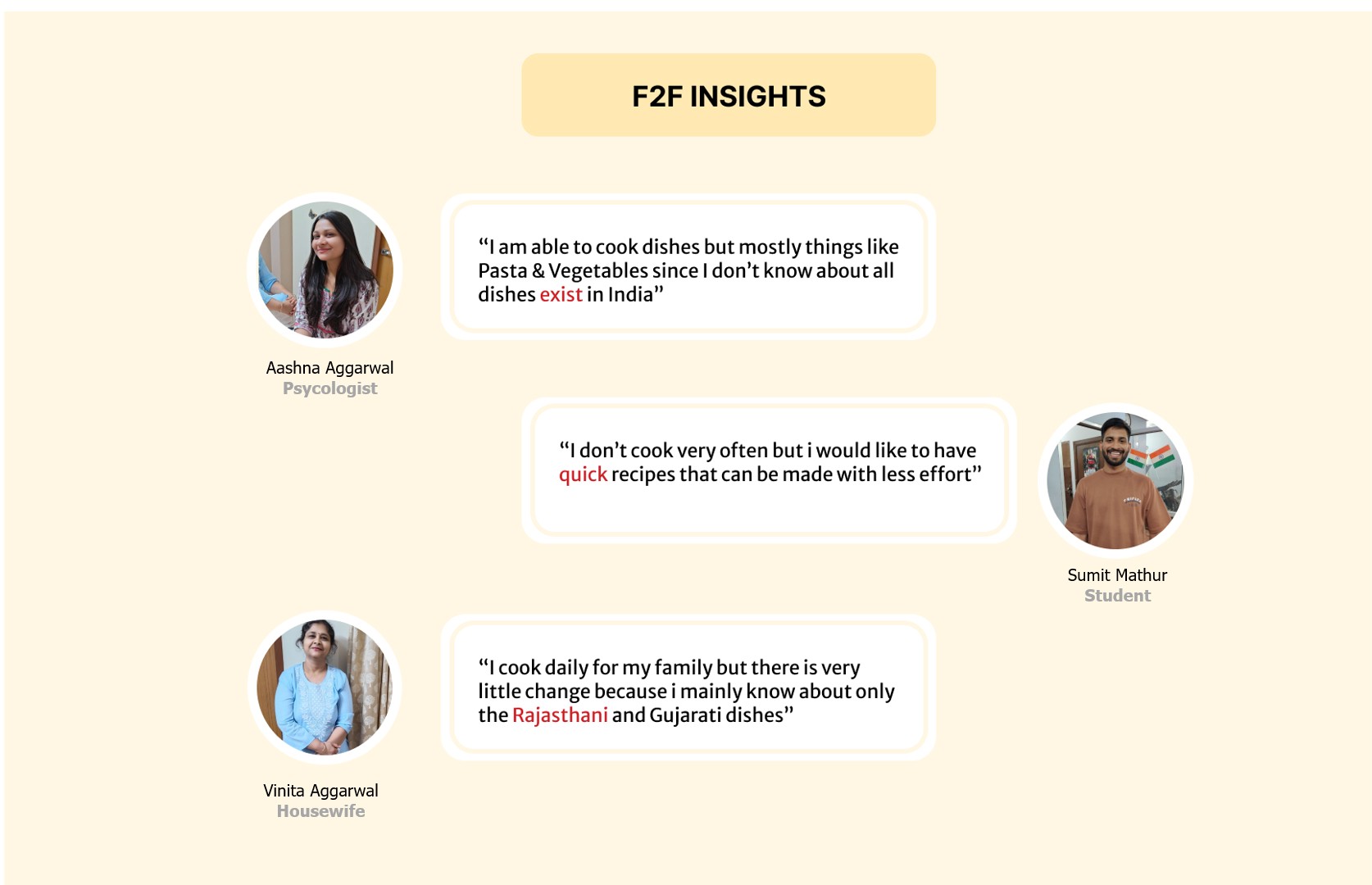
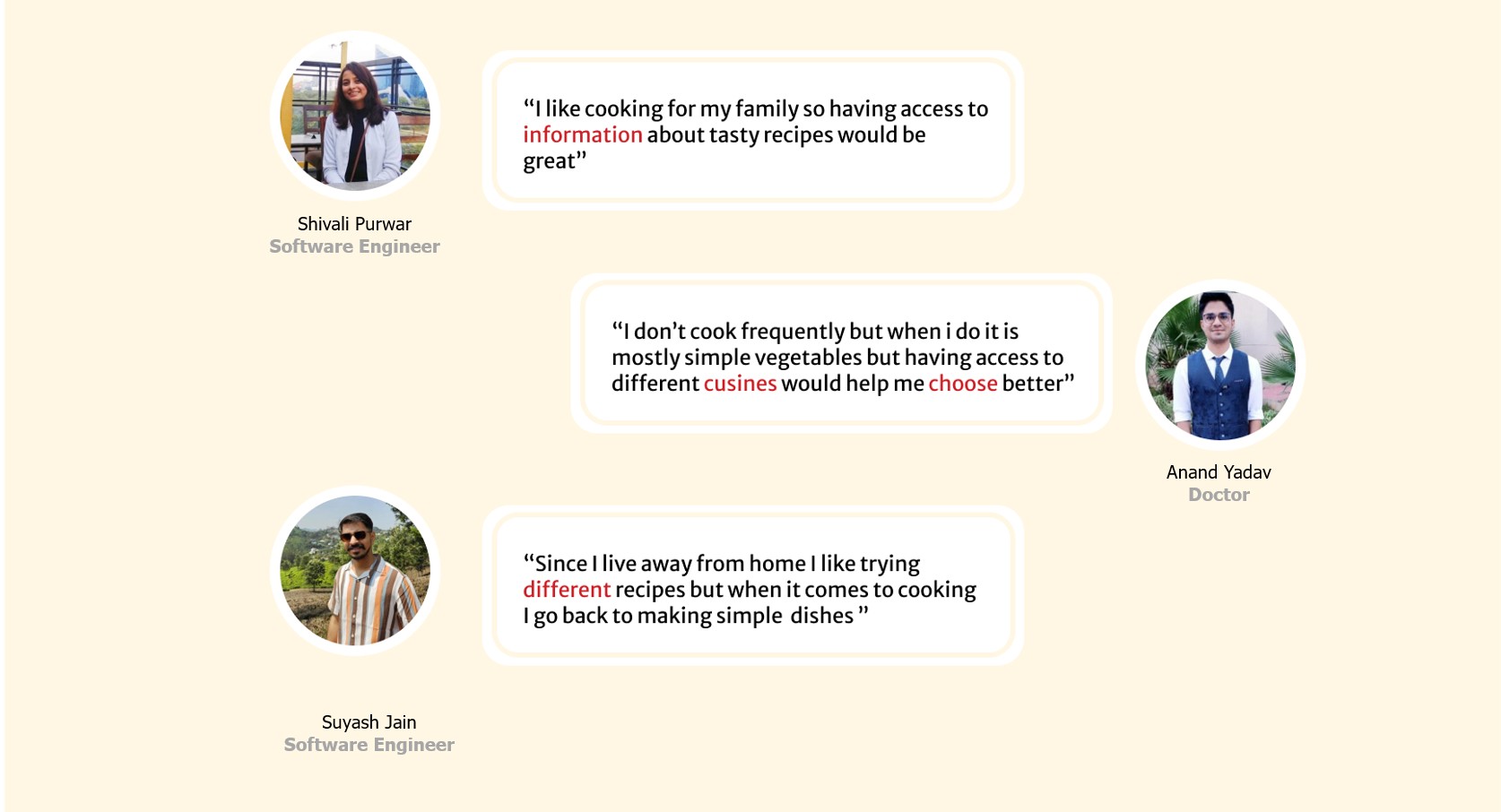
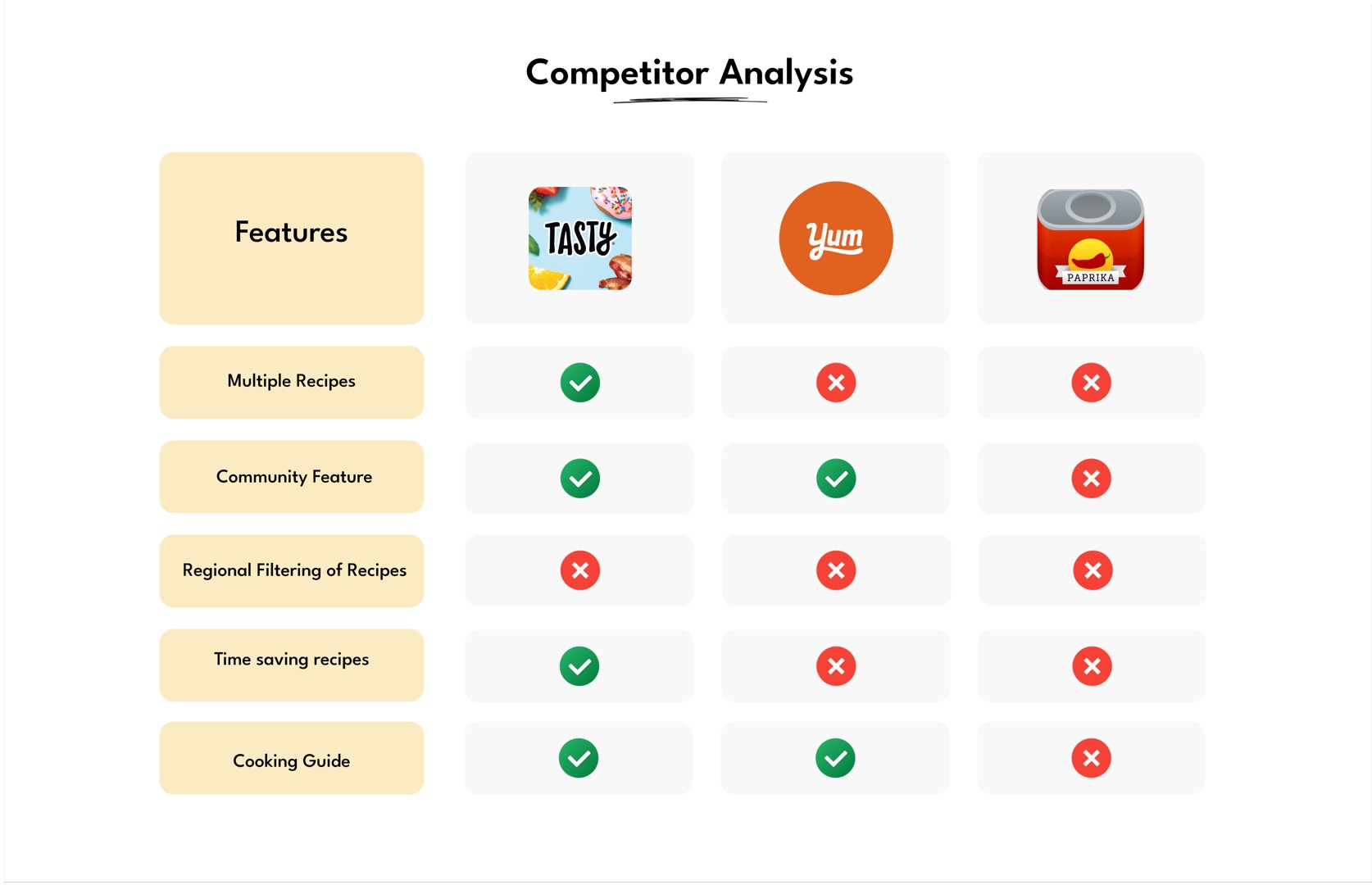
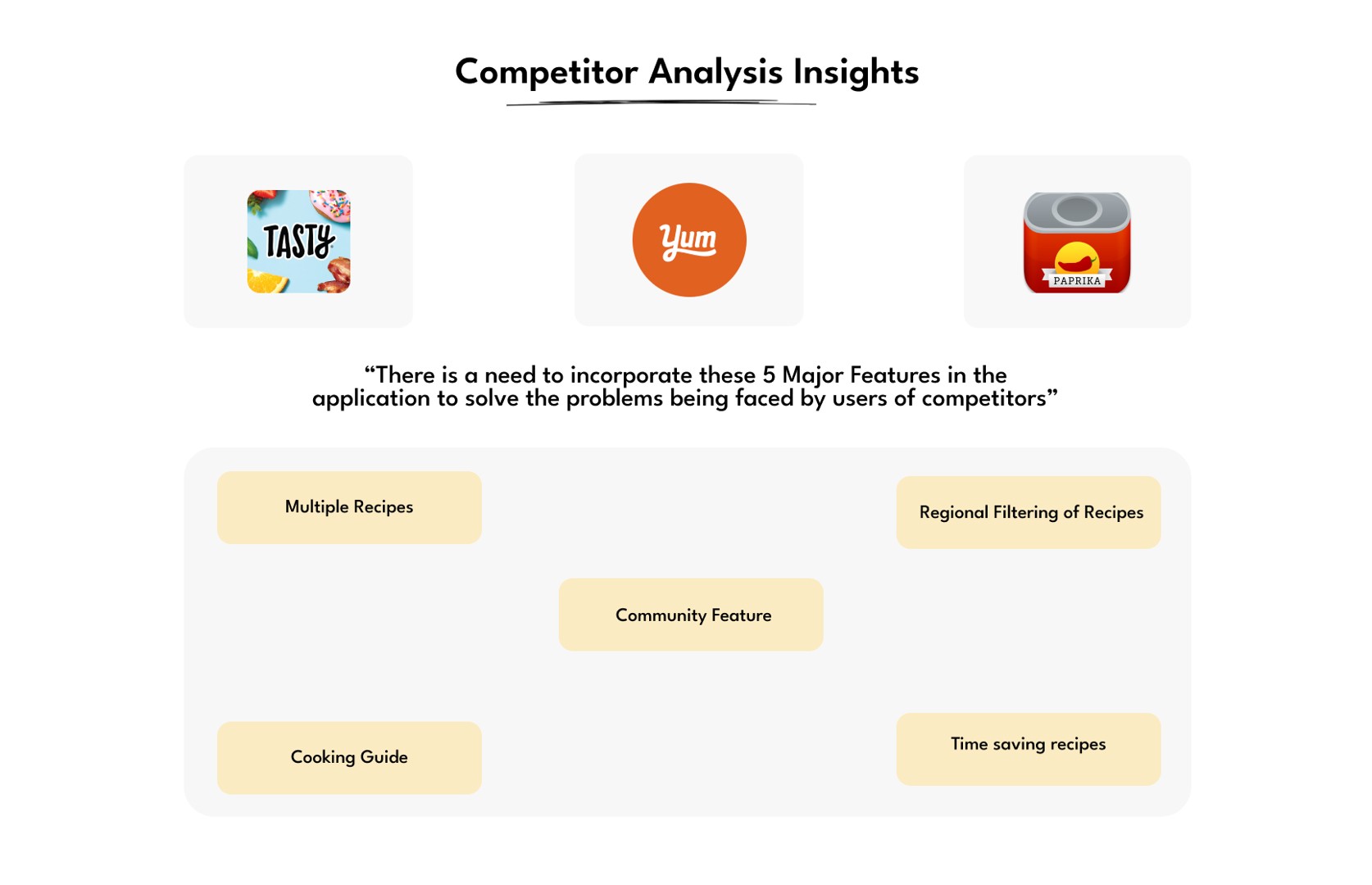
To understand real cooking behavior, I conducted mixed-method research. This included interviews with 30+ participants, a Google survey with ~50 responses, and competitive analysis of existing recipe and food platforms.
I also studied how users currently search, learn, and abandon new recipes. Research consistently showed that people trust video-based learning, feel overwhelmed by long written recipes, and often discover regional food accidentally rather than intentionally.
The User Journey
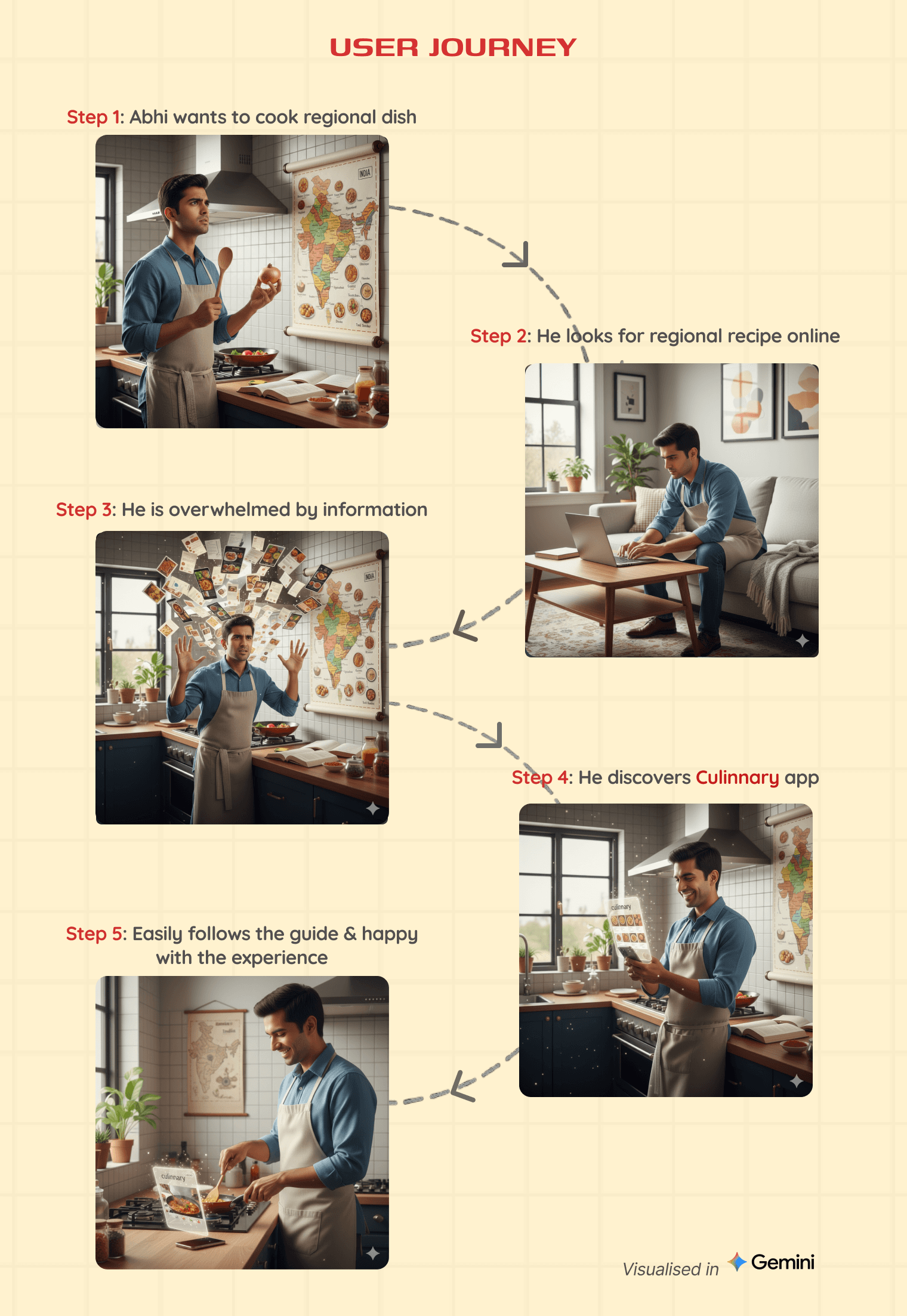
Mapping the existing journey revealed a clear breakdown. Users feel inspired to try something new, search online, encounter scattered blogs and long videos, and quickly lose confidence. The effort feels too high, so they abandon the idea and return to familiar meals. Culinary reframes this journey by making discovery visual first, learning familiar, and cooking feel achievable rather than risky.
With Culinary
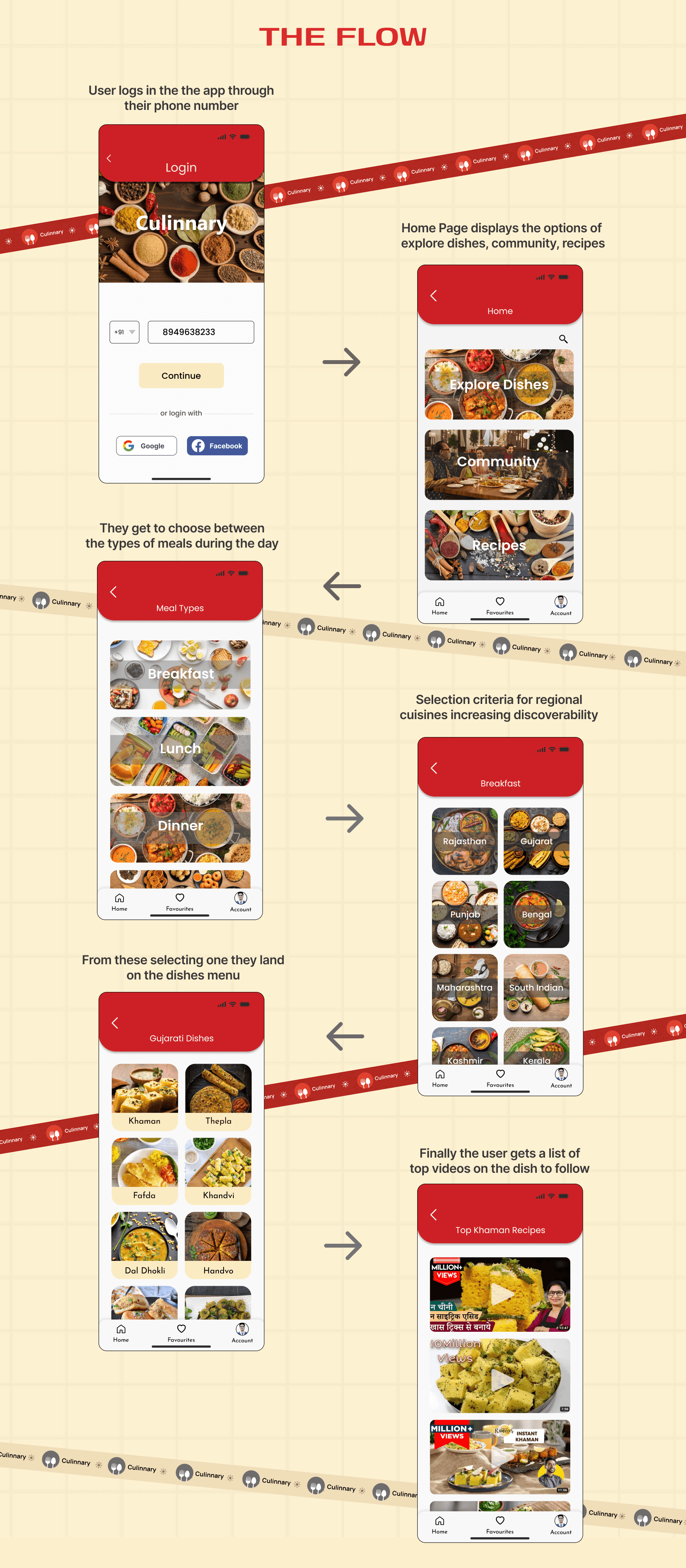
User opens the app
Explores regional dishes visually
Selects a dish
Sees ingredients list
Learns through top 3 curated YouTube videos
Cooks with confidence
The journey removes friction and cognitive overload.
The Opportunities Discovered
Users prefer seeing food before reading about it. Video feels safer than text, and familiar platforms like YouTube reduce learning anxiety. Users want guidance, not instruction overload.
This created an opportunity to design a system that supports exploration while respecting how people already learn — visually, casually, and step-by-step.
5. UX System Design
Culinary was designed as a discovery-first, learning-supported system.
Core UX decisions
Simple onboarding using mobile/email + OTP
Visual-first home screen focused on regional discovery
Ingredient list presented before instruction
Instruction delivered through curated external videos
Reduced cognitive load by avoiding long written recipes
The system respects how users already learn, instead of forcing new behaviors.
6. UI Design & Approach
The interface prioritizes accessibility, clarity, and cultural inclusivity.
Design principles
Minimalist layout to avoid overwhelm
Strong visual hierarchy for dishes
Clear ingredient lists
Familiar video thumbnails for instant recognition
Neutral, warm color palette to support exploration
The UI avoids appearing “expert-only” and welcomes beginners.
7. Final Solution & Impact
Culinary enables users to explore and cook regional food confidently, regardless of background or prior exposure.
Impact
Lowers barriers to cooking unfamiliar cuisines
Encourages cultural exploration through food
Reduces dependency on fragmented online searches
Makes food knowledge more inclusive and accessible
If scaled, Culinary could become a central discovery layer for regional cuisines, supporting cultural preservation and everyday cooking confidence.
CULINARY APP
Project headline
Improving meal discovery through guided cooking
Context
Lifestyle · B2C · Mobile
Role
UX/UI Designer · Interaction → Visual
The Project Overview
Food is deeply cultural, yet access to food knowledge is not equal. While recipes exist online, discovering authentic regional dishes and learning how to cook them often requires prior exposure, social networks, or trial-and-error.
This project began with the broader idea of equality, which gradually narrowed down to food information accessibility - questioning why culinary knowledge should be limited by geography, language, or background.
The goal was to design a system that makes discovering and preparing regional food as easy as possible for everyone.
The Problem Definition
Most people want to cook something new but fall back on familiar dishes. Existing recipe platforms are text-heavy, intimidating, and fragmented across blogs and videos. Authenticity is hard to judge, instructions feel overwhelming, and confidence drops quickly.
The core problem became clear: how do we reduce friction and anxiety when users try to discover and cook unfamiliar regional food?
The Research Process
To understand real cooking behavior, I conducted mixed-method research. This included interviews with 30+ participants, a Google survey with ~50 responses, and competitive analysis of existing recipe and food platforms.
I also studied how users currently search, learn, and abandon new recipes. Research consistently showed that people trust video-based learning, feel overwhelmed by long written recipes, and often discover regional food accidentally rather than intentionally.
The User Journey
Mapping the existing journey revealed a clear breakdown. Users feel inspired to try something new, search online, encounter scattered blogs and long videos, and quickly lose confidence. The effort feels too high, so they abandon the idea and return to familiar meals. Culinary reframes this journey by making discovery visual first, learning familiar, and cooking feel achievable rather than risky.
With Culinary
User opens the app
Explores regional dishes visually
Selects a dish
Sees ingredients list
Learns through top 3 curated YouTube videos
Cooks with confidence
The journey removes friction and cognitive overload.
The Opportunities Discovered
Users prefer seeing food before reading about it. Video feels safer than text, and familiar platforms like YouTube reduce learning anxiety. Users want guidance, not instruction overload.
This created an opportunity to design a system that supports exploration while respecting how people already learn — visually, casually, and step-by-step.
5. UX System Design
Culinary was designed as a discovery-first, learning-supported system.
Core UX decisions
Simple onboarding using mobile/email + OTP
Visual-first home screen focused on regional discovery
Ingredient list presented before instruction
Instruction delivered through curated external videos
Reduced cognitive load by avoiding long written recipes
The system respects how users already learn, instead of forcing new behaviors.
6. UI Design & Approach
The interface prioritizes accessibility, clarity, and cultural inclusivity.
Design principles
Minimalist layout to avoid overwhelm
Strong visual hierarchy for dishes
Clear ingredient lists
Familiar video thumbnails for instant recognition
Neutral, warm color palette to support exploration
The UI avoids appearing “expert-only” and welcomes beginners.
7. Final Solution & Impact
Culinary enables users to explore and cook regional food confidently, regardless of background or prior exposure.
Impact
Lowers barriers to cooking unfamiliar cuisines
Encourages cultural exploration through food
Reduces dependency on fragmented online searches
Makes food knowledge more inclusive and accessible
If scaled, Culinary could become a central discovery layer for regional cuisines, supporting cultural preservation and everyday cooking confidence.
see also